
How AI Will Affect Unions and Collective Agreements: A New Era of Bargaining Power
Neil L. Rideout
3/27/20264 min read
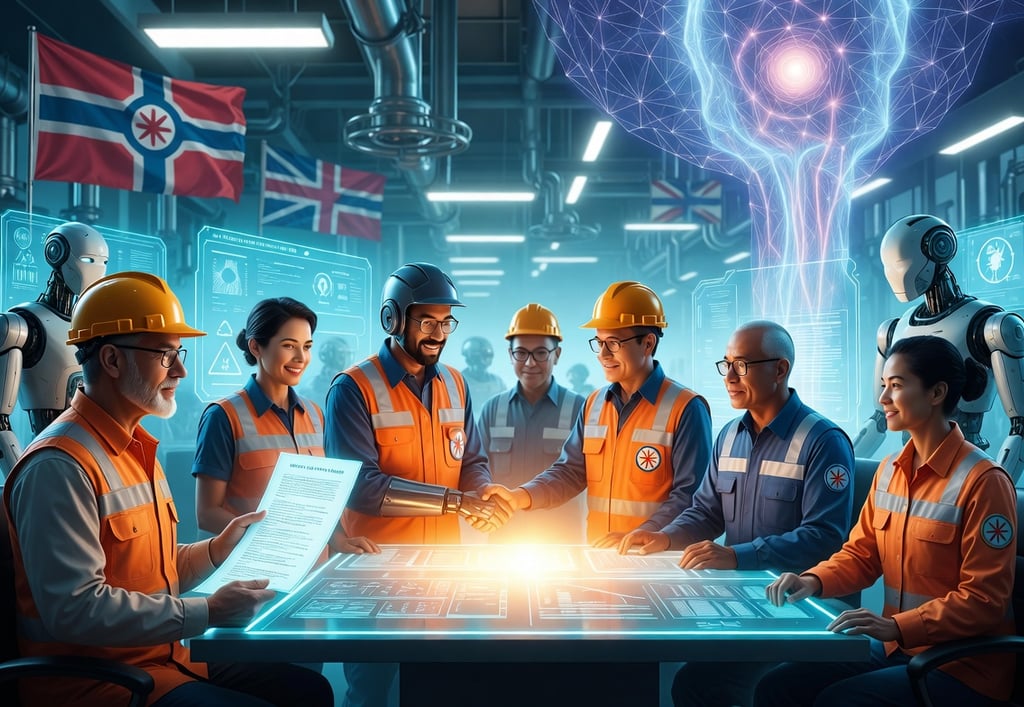
How AI Will Affect Unions and Collective Agreements: A New Era of Bargaining Power
Artificial intelligence is no longer a distant sci-fi concept—it's reshaping workplaces right now, from assembly lines to creative studios. As of 2026, AI tools automate routine tasks, monitor performance, and even generate content that once required human hands. For labor unions and the collective agreements they negotiate, this technological wave presents both existential threats and unprecedented opportunities. Unions have long served as the counterbalance to corporate power, securing wages, benefits, and job protections through collective bargaining. But AI disrupts the very foundation of that power: the leverage workers derive from their irreplaceable labor. Will unions wither in the face of automation, or will they evolve into architects of an AI-augmented workforce? The answer lies in how they adapt their strategies and embed safeguards into collective agreements today.
The scale of AI's impact on jobs is staggering. Economists and labor experts predict that generative AI could transform or displace millions of roles across sectors. Routine cognitive tasks—like data entry, customer service scripting, or basic legal review—are increasingly handled by algorithms. Even physical jobs face pressure: autonomous cranes at ports, AI-driven predictive maintenance in manufacturing, and robotic assembly in auto plants. A 2025 Senate report highlighted potential for nearly 100 million U.S. jobs affected over the next decade. Yet history shows automation rarely eliminates work entirely; it shifts it. The Industrial Revolution displaced artisans but created factory jobs. AI may do the same—demanding new skills in prompt engineering, AI oversight, and ethical data handling—while eliminating others.
Unions aren't blindly resisting AI. Major federations like the AFL-CIO explicitly state they do not oppose the technology but insist workers must have a voice in its design, development, and deployment. The goal is shared prosperity: AI boosting productivity without eroding job quality, safety, or dignity. This stance marks a shift from past automation battles, where unions often fought for severance or early retirement. Today, the focus is proactive—bargaining over AI before it's rolled out.
Collective agreements, the binding contracts between unions and employers, are the primary battleground. Traditional clauses on wages, hours, and grievances are expanding to cover algorithmic management, data privacy, and technological displacement. Unions now demand:
Advance notice and consultation rights: Employers must disclose AI plans early, allowing unions to bargain impacts on staffing, workloads, and evaluations.
Protections against surveillance: AI tools tracking keystrokes, tone of voice, or biometrics require strict limits, human oversight, and worker consent to prevent bias or unfair discipline.
Reskilling and upskilling mandates: Employers fund training programs so displaced workers transition into AI-complementary roles rather than facing layoffs.
Job security guarantees: Bans or moratoriums on "fully automated" systems that eliminate human interaction entirely, or requirements that AI cannot replace workers without retraining or redeployment.
Transparency and human-in-the-loop rules: Decisions on hiring, promotion, or discipline cannot rely solely on AI; workers get rights to explanation, appeal, and correction of algorithmic errors.
Compensation for AI-generated value: In creative fields, clauses ensure performers or writers control and profit from digital replicas or AI-assisted content.
These provisions aren't theoretical. A UC Berkeley Labor Center database now tracks over 950 technology-related contract clauses negotiated in recent years, covering everything from electronic monitoring to AI ethics. Surveys of European unions show growing inclusion of AI topics in agreements, though still only about 20% have specific provisions—indicating room for rapid evolution.
Real-world victories illustrate the power of collective action. In 2023, the Writers Guild of America (WGA) and SAG-AFTRA secured landmark protections during their strikes. Writers won limits on AI-generated scripts, mandatory disclosure of AI use, and control over how they incorporate the technology. Actors gained consent requirements and compensation for digital replicas of their likenesses—preventing studios from creating "synthetic" performances without pay. These deals set precedents that echoed into 2025 contracts, including commercials and video games, with even stronger guardrails.
On the waterfront, the International Longshoremen's Association (ILA) struck East and Gulf Coast ports in 2024, securing a ban on fully automated gates, cranes, and trucks in their new collective bargaining agreement. Las Vegas culinary workers negotiated notice and bargaining rights over AI in casino operations. In Pennsylvania, SEIU Local 688 won public protections alongside worker safeguards in an AI agreement with the governor. Even in Europe, unions like Germany's IG Metall have forged "solidarity pacts" for retraining in AI-integrated manufacturing.
AI itself is entering the bargaining room. Tools now analyze thousands of past contracts for inconsistencies, benchmark proposals across industries, and draft clauses in seconds. Labor negotiators use AI for strategy—spotting leverage points or simulating outcomes—while employers gain similar advantages. The net effect levels the informational playing field, potentially accelerating deals but also raising stakes around data security and bias in AI-assisted bargaining.
Challenges remain significant. Not all workers are unionized; gig and platform economy employees often lack collective agreements entirely, leaving them vulnerable to algorithmic management by apps. Retraining programs show mixed results—some displaced workers see earnings gains, but those from high-AI-risk jobs may earn 25% less post-training. Unions must also confront internal adaptation: organizing white-collar tech workers, addressing unequal impacts on marginalized communities, and countering employer resistance to "mandatory subjects" of bargaining like AI deployment.
Opportunities abound. Unions can leverage AI for better member services—predictive analytics for organizing drives, personalized training portals, or chatbots for grievance support. By demanding "workers-first AI," they position themselves as partners in ethical innovation rather than obstacles. Broader societal roles may emerge if mass displacement occurs: advocating for policies like shorter workweeks, universal basic income supplements, or public AI dividends funded by productivity gains.
Looking ahead to 2030 and beyond, unions that embed robust AI clauses today will shape tomorrow's labor market. Collective agreements could evolve to include joint labor-management AI oversight committees, equity audits for algorithmic bias, and profit-sharing from AI efficiencies. Governments are watching—states like New York now require AI-related disclosures in mass layoff notices—potentially amplifying union leverage through regulation.
The AI era won't render unions obsolete; it will test their relevance. By insisting on inclusion, transparency, and fairness, unions can ensure AI augments human work rather than replacing it. Workers won't be passive data points in an algorithm—they'll be co-authors of the future of work. Employers who partner with unions rather than evade them will build more resilient, innovative enterprises. The collective agreement, once a static document on wages and hours, is becoming a living blueprint for technological justice.
In the end, AI's effect on unions hinges on one timeless principle: power concedes nothing without demand. Through bold negotiation, strategic adaptation, and unwavering solidarity, labor can turn disruption into dignity. The next contract round isn't just about pay—it's about who controls the machines that power our economy. Unions are ready. The question is whether employers - and society - are.
Contact
Head Office
Green Life Enterprises LLC
8 Biltmore Est
Suite 310,
Phoenix, AZ 85016
greenlifedatacenters@gmail.com
+1-813-220-0001
© 2026. All rights reserved.
* The American Government has now redefined the industry, Artificial Intelligence (AI) is now defined as Super Intelligence (SI) Our website reflects that change.
Canadian Office
Green Life Enterprises LLC
3142 Nicholson Ave
Suite 10
New Waterford, Nova Scotia B1H 1N8