
How AI is Revolutionizing the Future of Seamstresses and Dressmakers
Neil L. Rideout
6/4/20265 min read
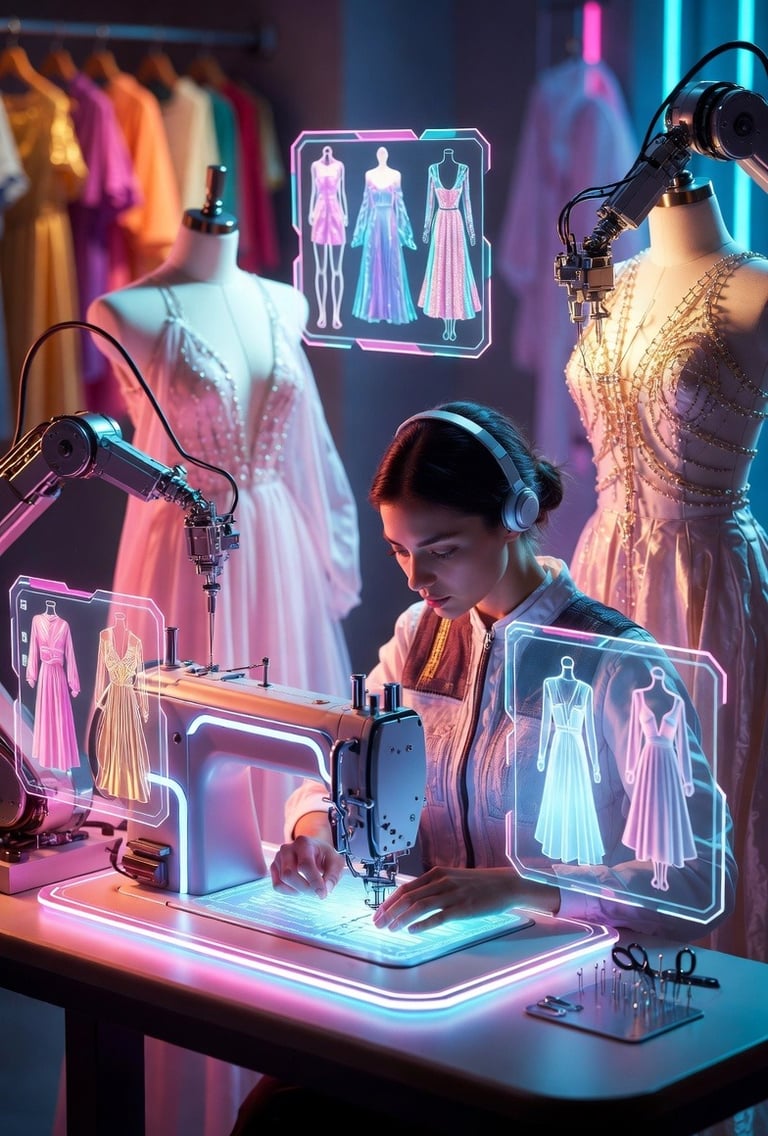
How AI is Revolutionizing the Future of Seamstresses and Dressmakers
The fashion industry has always been a blend of creativity, craftsmanship, and precision. For generations, seamstresses and dressmakers have been the backbone of this world—turning bolts of fabric into wearable art through skilled hands and keen eyes. Yet, the future promises an exciting evolution. Artificial Intelligence (AI) is poised to become the ultimate collaborator, enhancing rather than replacing these artisans. From accelerating design processes to personalizing garments at scale, AI will empower seamstresses and dressmakers to work smarter, create bolder, and reach wider audiences. This blog explores the transformative potential of AI in this timeless craft, painting a picture of a more efficient, innovative, and sustainable future.
Intelligent Design and Pattern Generation
One of the most time-consuming aspects of dressmaking has always been pattern drafting. Traditionally, seamstresses rely on manual measurements, slopers, and countless adjustments. In the coming years, AI-powered design tools will change this dramatically.
Imagine uploading a simple sketch or verbal description—"flowing evening gown with asymmetrical hem in emerald silk"—and having AI generate dozens of detailed patterns instantly. Tools leveraging generative AI, similar to current image generators but specialized for fashion, will produce vector-based patterns optimized for body types, fabric drape, and construction feasibility.
Seamstresses could collaborate with AI by providing feedback loops. For instance, if a pattern doesn't sit right on certain curves, the AI learns and refines future suggestions. Platforms could integrate with 3D body scanning apps, allowing real-time adjustments based on client avatars. This means fewer muslins (test garments), less fabric waste, and faster iteration from concept to prototype.
For independent dressmakers, this levels the playing field against big fashion houses. Small studios could access enterprise-level design intelligence via affordable subscription software, fostering creativity without the burden of repetitive calculations.
Precision Fitting and Virtual Try-Ons
Fitting remains one of the biggest challenges in bespoke dressmaking. Clients often need multiple sessions for alterations, which can be frustrating and costly. AI will introduce hyper-accurate virtual fitting rooms.
Using smartphone cameras or dedicated scanning booths, AI can create precise 3D models of a client's body, accounting for posture, movement, and even anticipated weight fluctuations. Dressmakers could then simulate how a garment drapes, stretches, and moves in real life. Augmented reality (AR) glasses might overlay digital patterns onto live models during fittings, highlighting areas needing tweaks.
This technology extends to made-to-measure services. A seamstress could send digital patterns to clients worldwide, who then use local fabricators or home 3D knitting machines for production. AI algorithms would predict common fit issues based on vast datasets of body shapes and previous alterations, suggesting proactive modifications. The result? Higher client satisfaction, fewer returns, and stronger relationships built on trust and efficiency.
Smart Material Selection and Sustainable Practices
Choosing the right fabric is both an art and a science. AI can analyze vast databases of material properties—tensile strength, breathability, colorfastness, environmental impact—and recommend optimal choices for specific designs and climates.
Future AI systems might integrate with supply chains, scanning global inventories for eco-friendly or deadstock fabrics that match a project’s needs. For sustainable dressmaking, AI could calculate the exact yardage required, minimizing waste, and suggest upcycling combinations from leftover materials.
Predictive analytics could forecast trends, helping seamstresses stock materials ahead of demand. Imagine an AI assistant notifying a dressmaker: "Velvet in deep burgundy is rising in popularity for fall weddings—here are three ethical suppliers with current stock." This proactive approach reduces overproduction and supports circular fashion economies.
Automated Cutting and Assembly Assistance
While the human touch defines artisanal sewing, AI and robotics will handle repetitive, precision-heavy tasks. Computer-controlled cutters guided by AI vision systems can slice multiple layers of fabric with zero error, following complex patterns perfectly.
Collaborative robots (cobots) could work alongside seamstresses, holding fabric taut, feeding it through machines, or performing basting stitches. This allows artisans to focus on high-value creative work like intricate embellishments, hand-beading, or innovative construction techniques.
For larger operations or small-batch production, AI-orchestrated micro-factories could enable on-demand manufacturing. A dressmaker designs and oversees, while automated systems handle bulk elements. This hybrid model preserves craftsmanship while scaling output sustainably.
Personalized Marketing and Client Experience
AI will transform how seamstresses and dressmakers connect with clients. Chatbots and virtual assistants can handle initial consultations 24/7, gathering preferences, budgets, and timelines. Natural language processing allows clients to describe dreams conversationally, with AI translating them into technical briefs.
Recommendation engines could suggest styles based on past purchases, body data, lifestyle, and even social media activity (with permission). Post-purchase, AI could offer care instructions, styling tips, or alerts for alterations as body shapes change over time.
For marketing, AI-generated content—professional photos of garments on diverse virtual models, social media captions, or trend reports—saves time. Predictive tools help identify ideal selling windows or pricing strategies based on market data.
Skill Development and Knowledge Preservation
AI serves as an incredible mentor. Augmented reality tutorials could project step-by-step guidance onto workspaces for complex techniques like French seams or couture tailoring. Machine learning models trained on master artisans’ methods could preserve rare skills, making them accessible to new generations.
For apprentices, AI feedback systems analyze sewing speed, stitch consistency, and tension using cameras, offering real-time coaching. This accelerates learning while freeing human mentors for deeper creative instruction.
Global collaboration becomes seamless. A dressmaker in rural Italy could partner with an AI platform connecting her to virtual teams in Paris or Tokyo, sharing patterns and techniques across borders.
Challenges and Ethical Considerations
While the opportunities are immense, challenges exist. Job displacement fears are valid, though history shows technology often creates more roles than it eliminates—especially in creative fields. The key is positioning AI as an enhancer of human artistry rather than a replacement.
Data privacy concerns around body scans and client preferences must be addressed through robust security. Intellectual property issues arise with AI-generated designs—should patterns be copyrightable? Bias in AI training data could lead to limited representation of diverse body types, requiring conscious development.
Seamstresses and dressmakers should advocate for transparent, ethical AI tools that prioritize sustainability and fair labor. Over-reliance on technology might erode tactile skills, so balanced integration remains crucial.
The Empowered Artisan of Tomorrow
Looking ahead, the seamstress or dressmaker of 2035+ will be a hybrid professional: master craftsman, tech-savvy designer, and business innovator. AI handles drudgery and data, freeing humans for imagination, emotion, and connection—the elements that make clothing meaningful.
Small independent makers could compete globally with personalized, sustainable offerings. High-end couture houses might blend heritage techniques with cutting-edge AI for unparalleled luxury. The industry could become more inclusive, with AI lowering barriers for aspiring creators from varied backgrounds.
Ultimately, AI doesn't diminish the magic of handmade garments. It amplifies it. A dress conceived through human-AI collaboration, fitted perfectly via smart tech, crafted with precision tools, and delivered sustainably carries both tradition and innovation in its seams.
The future is bright for those willing to embrace these tools. Seamstresses and dressmakers who view AI as a creative partner will thrive, creating not just clothes, but experiences and stories woven into fabric. As the threads of technology intertwine with tradition, the art of dressmaking enters its most exciting chapter yet.
Contact
Head Office
Green Life Enterprises LLC
8 Biltmore Est
Suite 310,
Phoenix, AZ 85016
greenlifedatacenters@gmail.com
+1-813-220-0001
© 2026. All rights reserved.
* The American Government has now redefined the industry, Artificial Intelligence (AI) is now defined as Super Intelligence (SI) Our website reflects that change.
Canadian Office
Green Life Enterprises LLC
3142 Nicholson Ave
Suite 10
New Waterford, Nova Scotia B1H 1N8